
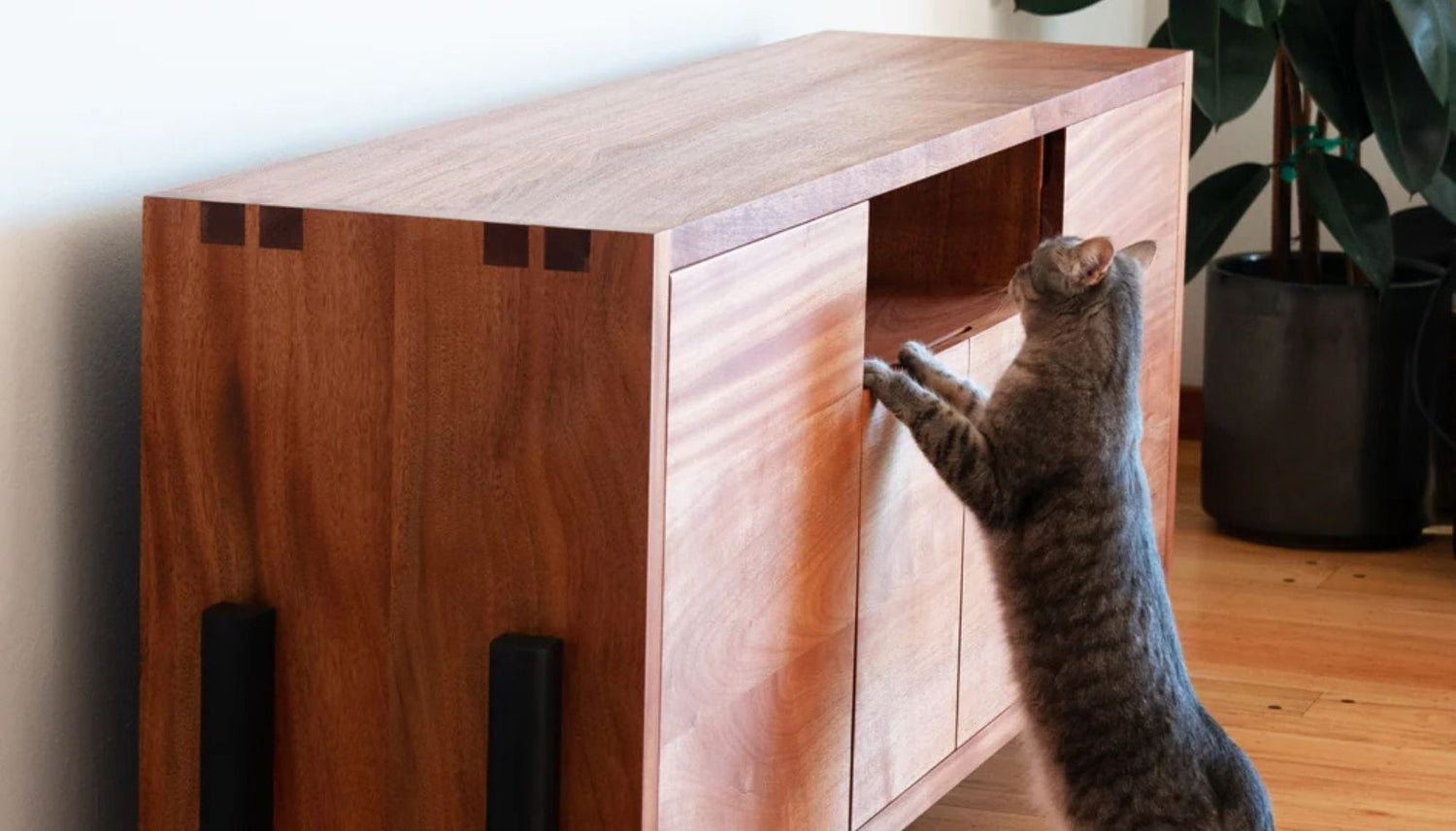
Investing in solid wood furniture means you’ll have pieces that can last a lifetime (and beyond!). At JOHI, we intentionally design and build our furniture as everyday heirlooms that can stick with you throughout different homes, ages, and stages of life.
But learning how to care for wood furniture is important, especially if you want your pieces to maintain their longevity. Caring for your furniture can be an easy process, and it doesn’t have to be over-complicated, even if you live in a busy, active home.
Overall, you shouldn’t be afraid to use solid wood pieces–they’re designed to stand up to everyday use! These care tips are simple best practices to keep in mind.
Jump to:
- General wood furniture care tips
- How often do I need to care for my wood furniture?
- Caring for solid wood furniture vs. veneer
- When should I refinish my wood furniture?
- Can I still maintain wood furniture with pets and kids?
- Make the transition to solid wood furniture
General wood furniture care tips
In general, harsh light, chemicals, and moisture can all affect your solid wood furniture. That means one of the best ways to care for your pieces is to try to avoid those things. Of course, accidents do happen, but that’s no big deal! These care tips can keep your furniture in great shape:
- Dust regularly with a soft, dry cloth
- Clean spills promptly with a slightly damp cloth, then dry
- Avoid harsh cleaners and silicone-based sprays
- Use coasters or trivets for hot, sweating, and wet items when possible
- Keep furniture out of direct, prolonged sunlight (when you can) to prevent uneven color change
- When possible, avoid placing furniture directly near air conditioning vents and heaters, as severe changes in temperature and humidity can cause natural lumber movement
How often do I need to care for my wood furniture?
Caring for your wood furniture is dependent on a variety of factors, including your home’s climate, the amount of direct sunlight, and how often your pieces are used.
As a general rule of thumb, dust and wipe your furniture regularly with proper wood care products. If your pieces get a ton of everyday use, like dining tables, you can use daily care sprays for cleaning. Other pieces that may not get a ton of interaction can simply get some attention once the wood starts looking dry and in need of a little care.
Because there’s no one-size-fits-all routine, we recommend checking in on your furniture regularly. It can become a part of your Spring and Winter cleaning regimens to make it a consistent check-in, but your intuition also plays a role. If your furniture looks or feels dry and dull, it’s time for a refresh. Over time, the right care routine can become second nature.
Caring for solid wood furniture vs. veneer
There is a fair bit of misconception around veneer and its place in furniture making. Some of the oldest and most exquisite pieces ever made feature dramatic veneers. When expertly crafted, these pieces can last just as long as their hardwood counterparts, and are often the right choice for certain designs.
That said, most modern furniture uses veneer to achieve a different goal: lower price points. Many commercial veneer applications are so thin that chips and peels are inevitable over time, exposing the substrate underneath. This is particularly the case for pieces that experience heavy use, like coffee tables and office desks.
In other cases, the laminated veneer layer can bubble or delaminate from the core substrate over time. It’s more difficult and time-intensive to repair such damage, so repairs can actually be more costly than solid wood furniture repair. Often, the repair fees become even more than the piece itself.
At JOHI, we primarily use hardwax oil finishes for the balance it strikes with beauty, repairability, and environmental responsibility.
Instead of sitting on top like a coating only, hardwax oil penetrates the wood fibers, allowing the finish to become a part of the wooden surface. It creates a natural sheen and warm feel. In comparison, most commercial finishes create a film as the final layer, which often has a more plastic-like feel.
You can also spot-repair hardwax oils without sanding and refinishing an entire piece, making it a more cost-effective option to maintain your furniture against even the most damaging spills and wear.
For JOHI furniture with hardwax oil finishes, we typically provide a recommended daily cleaner that contains a little oil. This can help maintain the even sheen and protective finish without the need to overthink your everyday care too much. Plus, we’re always happy to guide customers through maintenance and refinishing questions long after delivery–don’t hesitate to reach out!

When should I refinish my wood furniture?
One of the biggest benefits of solid wood furniture is that it can be sanded and refinished over and over. The timing is largely personal preference in your environment. Perhaps you want to refresh a tabletop surface after a couple of years of hosting many dinner parties. Or you notice your console frame could use a fresh oiling before the upcoming summer season.
Over time, you can also allow your pieces to develop a natural patina, which means commonly used surfaces may take on a natural low sheen or “mellowed” tone due to age and wear. Many furniture owners embrace the natural aging of their pieces, since the different tones come from a well-lived life that adds to their character.
However, if one chapter of life is especially hard on your hardwood furniture, the built-in benefit is that you can choose to refresh or fully reset the piece through refinishing–whether on your own or with the help of a professional. For safety’s sake, always read the instructions for how to prepare, apply, and dispose of materials if you are refinishing your wood furniture on your own.

Can I still maintain wood furniture when I have pets and children?
Speaking of being hard on your wood furniture, we tend to hear concerns particularly from customers with pets and/or children. While it’s true that pets and kids can take a toll on your home, it’s important to think of your wood furniture as something that can and should evolve. You can absolutely maintain your pieces even when you have pets and children.
The goal shouldn’t be to keep the furniture 100% flawless, but to keep it functional, beautiful, warm, and most of all–human. Furniture that is worn and aging naturally doesn’t mean it has to be labeled as “damaged.”
Refinishing is always an option for pieces that have taken a toll, but there are a variety of everyday solutions that can help clean surfaces and reduce chronic wear.
Did your two-year-old take crayons to the dining table? Warm air and a blotting cloth can often come to the rescue to remove stubborn residue. Or perhaps your dog is particularly attracted to your wood dining table leg–that’s when pet-safe deterrent sprays can come in handy. For specific issues similar to these, keep calm and look online for the best care instructions.
Family life will happen, but prompt care and a fresh mindset can help you move through temporary moments that don’t need to sacrifice the integrity of your furniture.
Make the transition to solid wood furniture
Many homeowners or renters are nervous to make the jump to solid wood furniture because it feels like a big responsibility. But in reality, caring for your wood furniture is even simpler than most cheaper, commercial options.
Artfully designed, expertly crafted wood furniture becomes an enjoyable mainstay within your home–wherever home is. If you’re ready to make the transition, shop JOHI wood furniture. We’re here every step of the way to guide you toward pieces you love and make recommendations for care.